
Add AI guardrails and rules. This way, you can produce brand-compliant and consistent content in no time. Of course, you can also share your content with individual team members or the entire workspace to collaborate.
Concrete examples of projects:
- Marketing Campaign Launch
- A marketing team is preparing a new product launch campaign.
- Inside the project, they create the campaign brief as a document, chat about design ideas, and attach brand guidelines.
- They use prompts like “Draft LinkedIn Ad Copy” or call the Content Agent with “@AdWriter” to generate variations.
- Everyone in marketing, design, and comms has access – so no information gets lost in emails or scattered docs.
- Client Proposal Preparation
- A sales team is working on a strategic proposal for a key client.
- They gather past case studies, reference pricing sheets, and legal templates inside one project.
- During chats, they can tag the Proposal Agent to draft sections or use autosuggested prompts to polish wording.
- The project is shared with sales, legal, and finance – ensuring all stakeholders collaborate in one place.
- Product Development Sprint
- A product team sets up a project for the upcoming sprint.
- User stories, specs, and research docs live in one place.
- In chat, they call “@TechAgent” to generate code snippets or “@ResearchAgent” to summarize competitor benchmarks.
- Designers, developers, and PMs all collaborate seamlessly without jumping across tools.
- HR Onboarding Program
- HR creates a project for new hires starting in October.
- It contains onboarding documents, training checklists, and company guidelines.
- The HR assistant agent helps generate personalized onboarding emails and FAQs.
- Managers and HR share access so every department can align on a smooth onboarding experience.
- Compliance & Audit Preparation
- The compliance team prepares for an external audit.
- All policies, contracts, and evidence docs are organized inside the audit project.
- Prompts like “Summarize GDPR checklist” or “@PolicyAgent” ensure the latest legal text is applied.
- The workspace is shared with compliance, legal, and external auditors – guaranteeing transparency and one single source of truth.
How do I create a project?
1. Create a project
Simply click the ‘Create Project’ entry in the navigation. Enter your Project name in the dialog displayed and your project is created.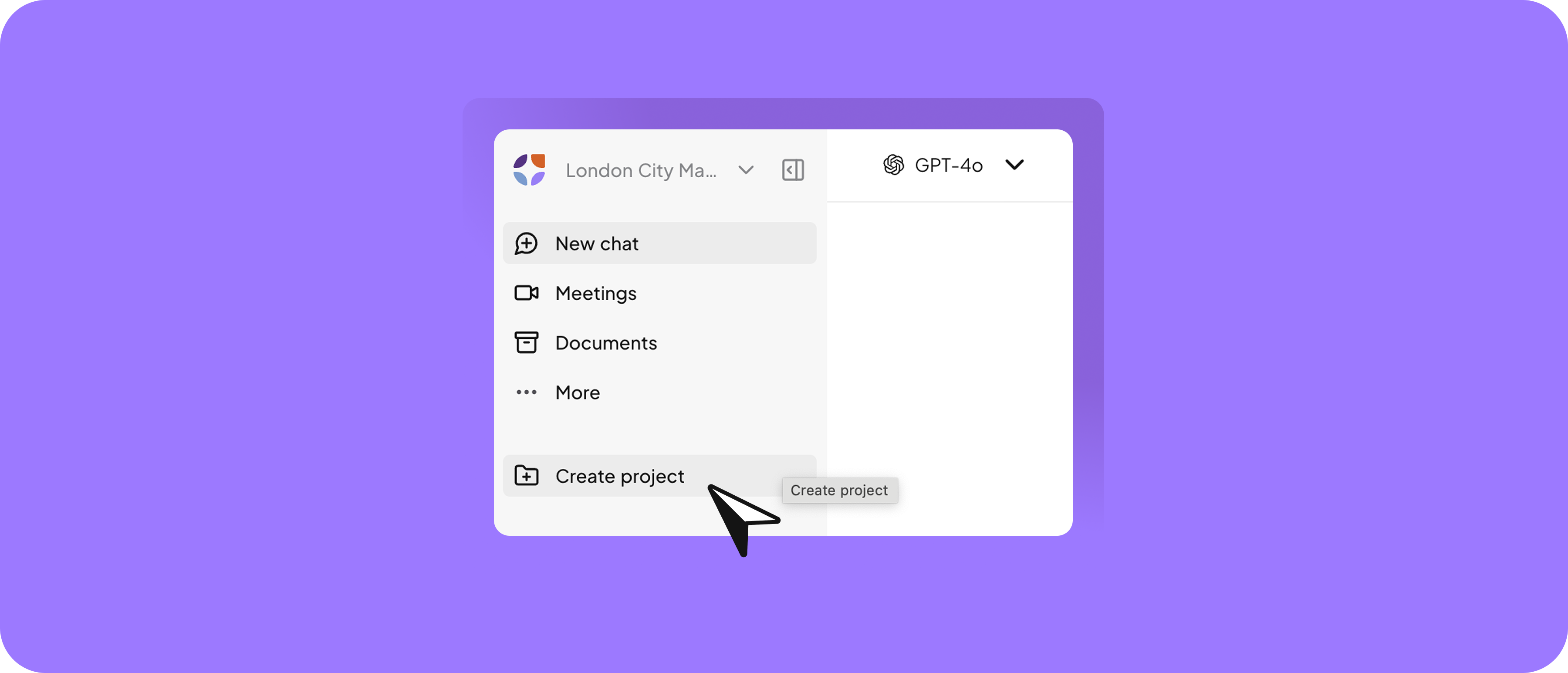
- Upload a new file: Upload relevant files directly from your computer to nuwacom.
- Add from knowledge base: Select documents from the knowledge base.
2. Create documents
Simply start chatting while the “Canvas” toggle is on.- Add predefined prompts and agents by clicking the plus icon in the chat and selecting “Run prompts and agents”
- Add additional knowledge or files as context for this specific chat
- Set your predefined brand voice via the “Select language style” icon
3. Optimize text in the AI editor
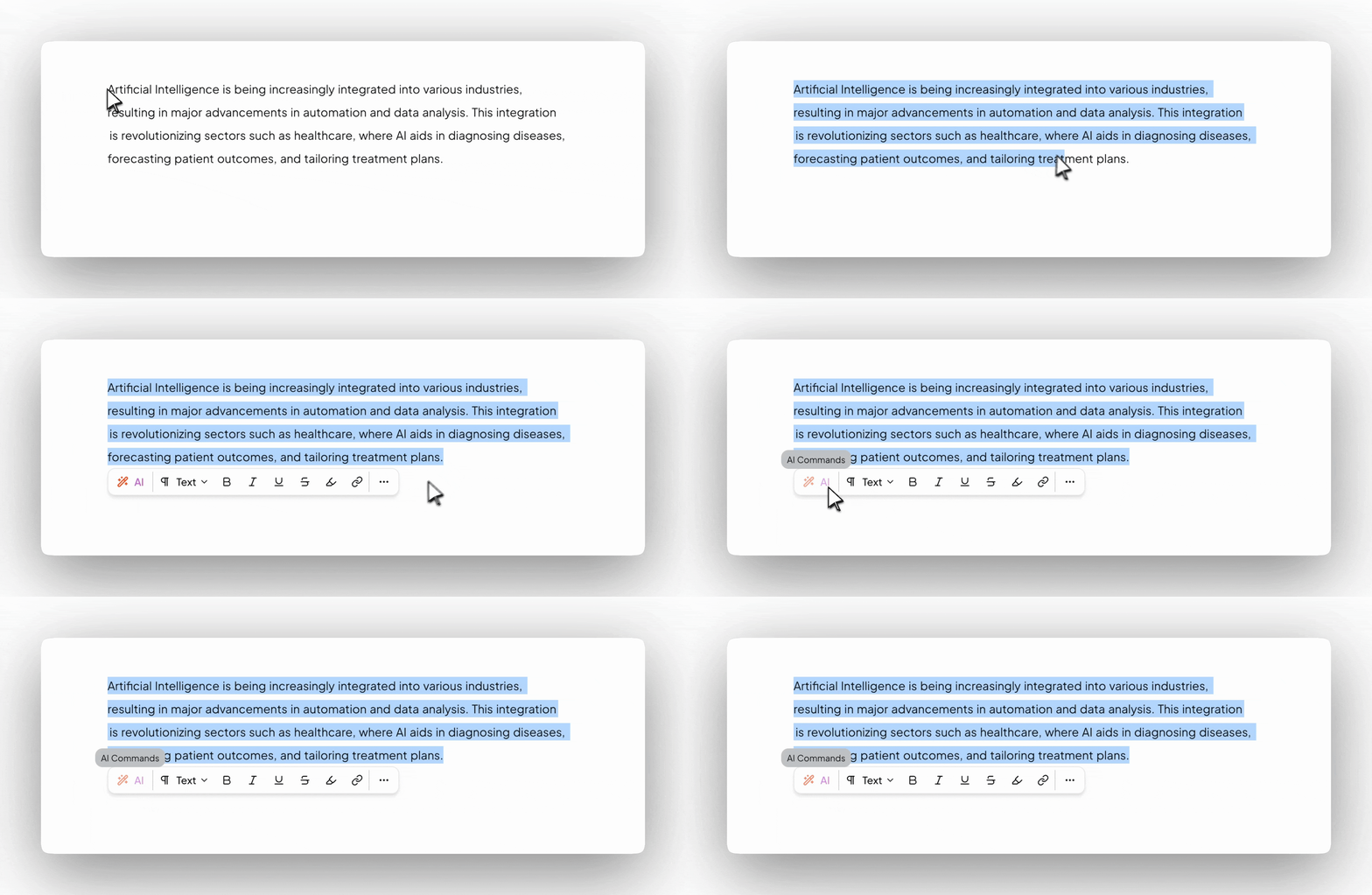
Once the document is generated, you can review and optimize it in the text editor using AI tools. Highlight text lines and apply AI adjustments, such as:- Spelling and grammar: Fix text errors.
- Tone of voice: Adjust the text’s tone.
- Text simplification: Make complex passages easier to read.
- Translations: Translate the text into another language.
- Formatting: Use the formatting toolbar to style your text (like bold, italic, underline, strike-through, or code format) or add links.
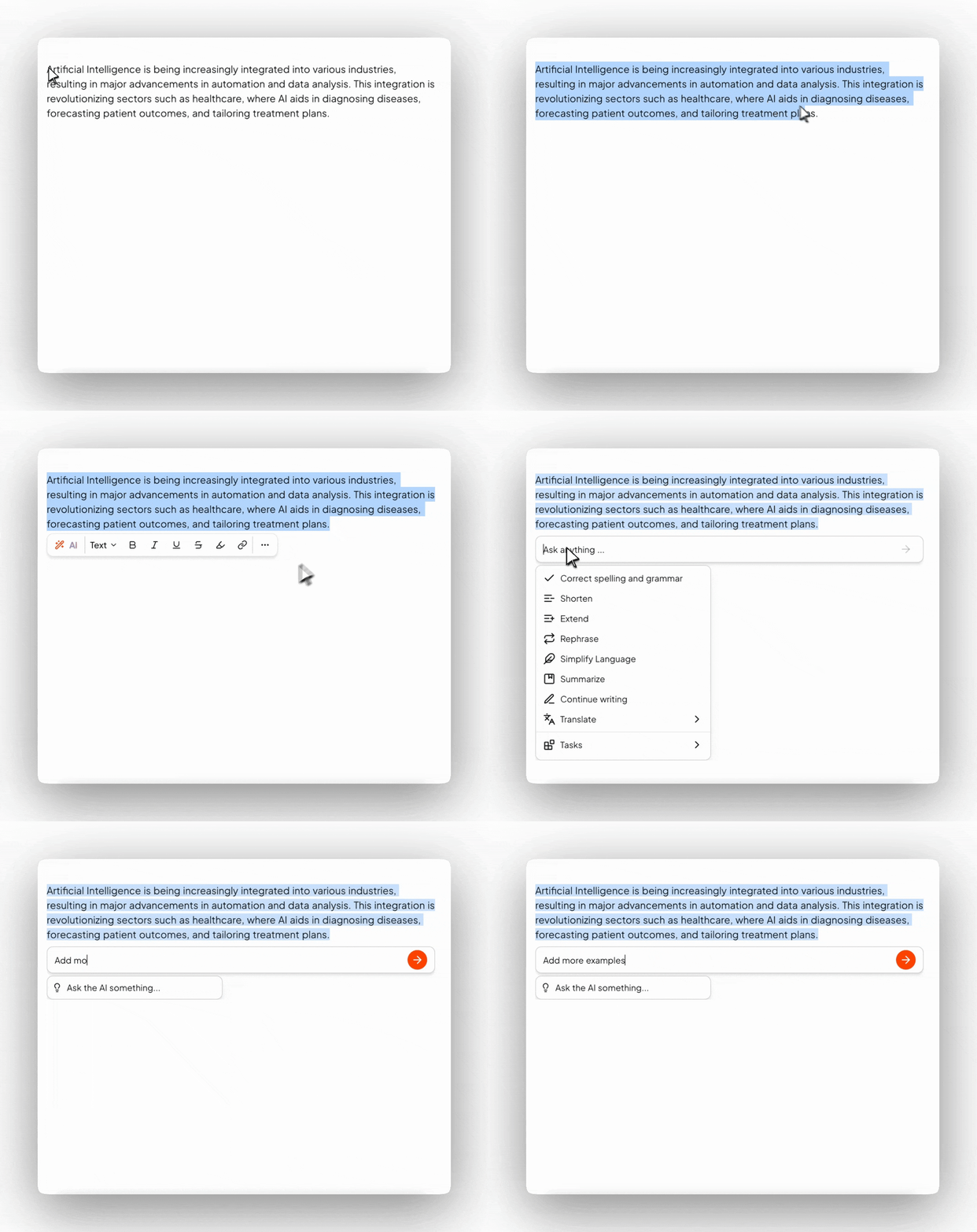
Type your instructions in the input field to customize your text exactly how you need it. Examples:
- Adjust tone: ‘Make the text more engaging and lively.’
- Shorten: ‘Shorten the text without losing its meaning.’
- Add examples:‘Include three relevant examples in the text.’
Documents that you edit within projects are automatically saved. Nothing gets lost, even if you leave the page or pause your work. Once finalized, the text can be seamlessly copied and integrated into documents, presentations, websites, or any other relevant medium.
4. Organize documents in your team
Once you’re working on multiple documents in a project, statuses and the Kanban board help you maintain overview and structure collaboration in your team.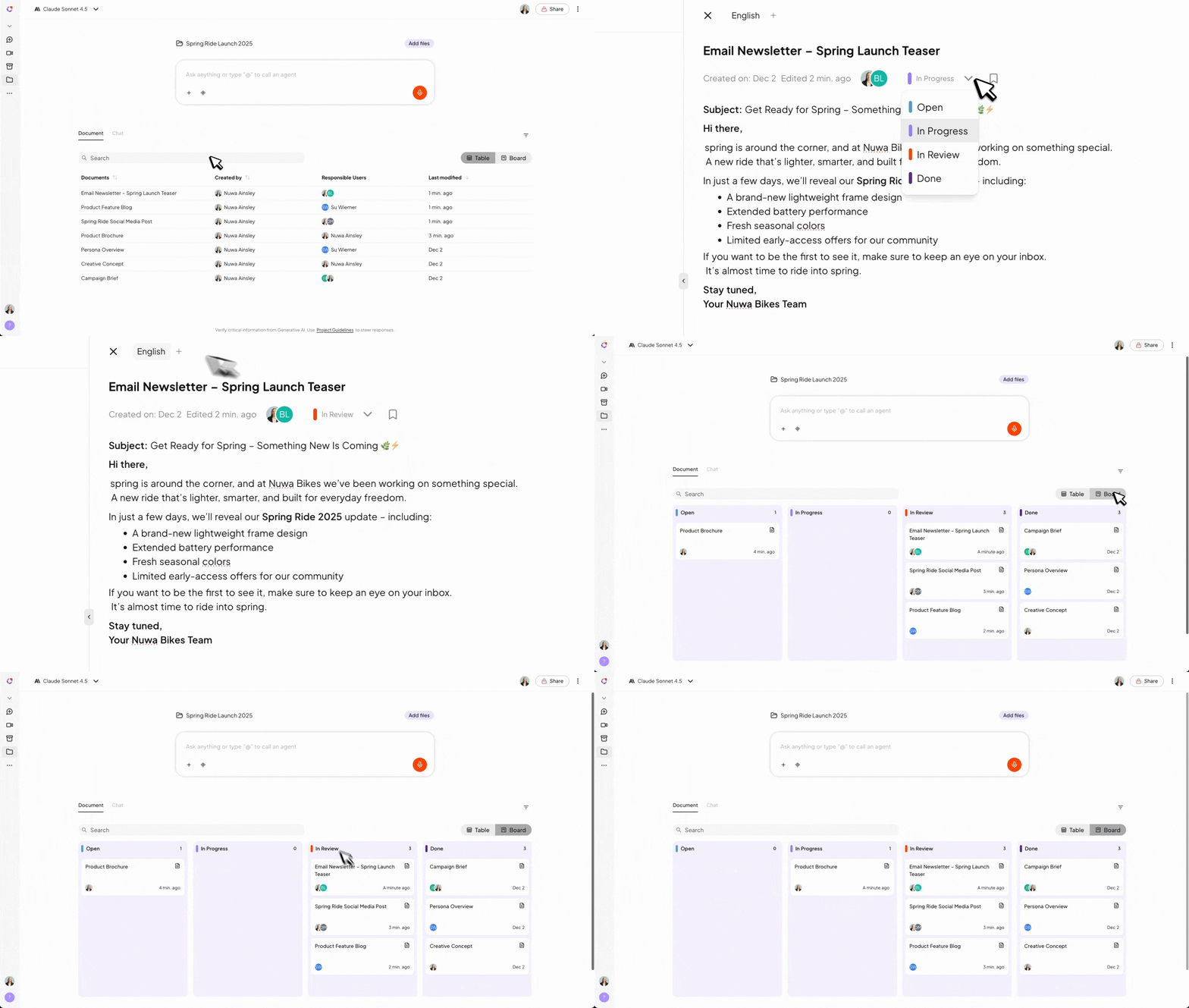
- Open – Document has been created
- In Progress – Editing in progress
- In Review – Review by others
- Done – Completed
- Open board: Click on Board in the top right of the Documents area to switch from table view
- Create documents: Click on + New Document in a column to create a document directly with the desired status
- Change status: Drag and drop cards to another column or change the status directly in the document
- Open documents: Click on a card to open the document. All changes are saved automatically
- Quick search: Use search or filters to find documents by title, status, or assignee
Develop ideas and conduct research in chat
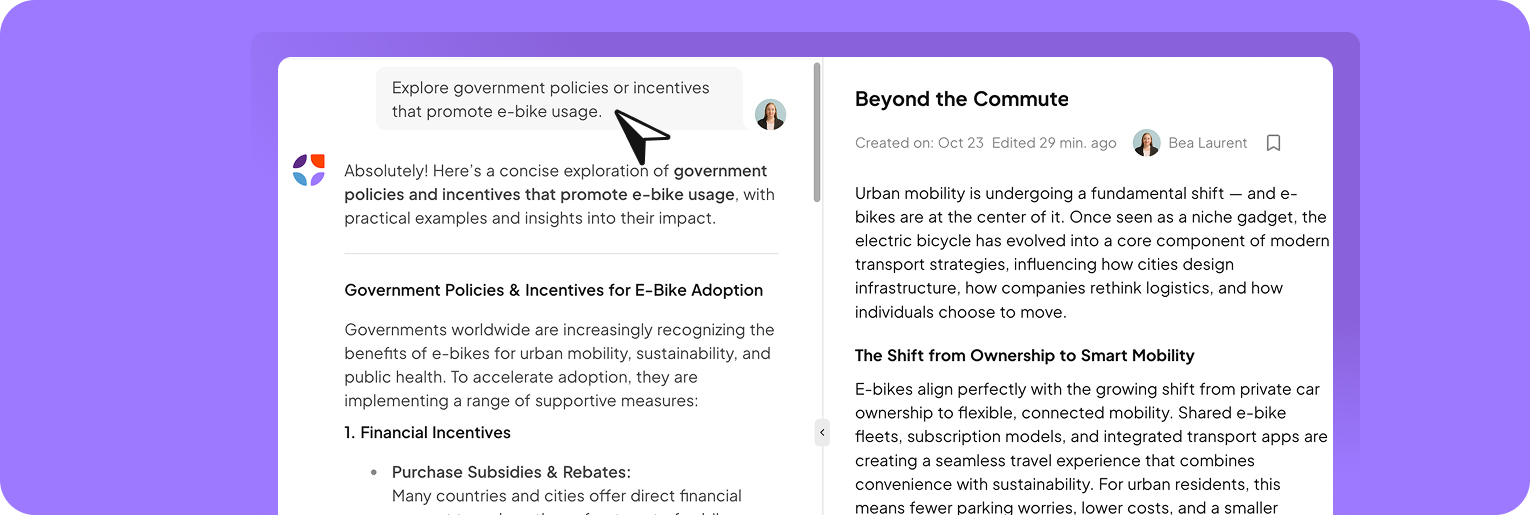
Here, you can brainstorm ideas, ask questions, or expand on existing texts — without leaving the editor. Use the chat to:
- Develop ideas and plan content — e.g., topic suggestions for blog articles, social media posts, or campaigns.
- Submit research requests — for example, on current trends, sources, or data from your knowledge base.
- Access agents specialized in specific tasks (e.g., Fact Checker, Proofreader, or Social Media Writer).
- Refine or rephrase texts while working in the editor simultaneously.